
The pitch says anyone can sell AI prompts and make money while they sleep. The reality is less romantic: prompt packs sell for $19, compete with thousands of identical PDFs, and the buyers vanish after one download.
The real opening is nine service lines where a named business already has a messy input and a deadline. A freight broker with a full inquiry inbox. A dental office with denials aging out. A CPA firm with workpapers due Friday.
Here are nine of them, each with a buyer, a tool, the honest time per job in three parts, and a first-project fee. Pick one. The thin competition is the point.
🎯 THE SHORT ANSWER
The short answer
The money is not in selling prompts. It is in installing outcomes for specific businesses — connecting two apps, turning voice memos into reports, preparing workpapers — where the buyer already has the messy input. Start with the one line that matches a business you can get a meeting with this month.
1. The Intake Workflow Install on Make or Zapier
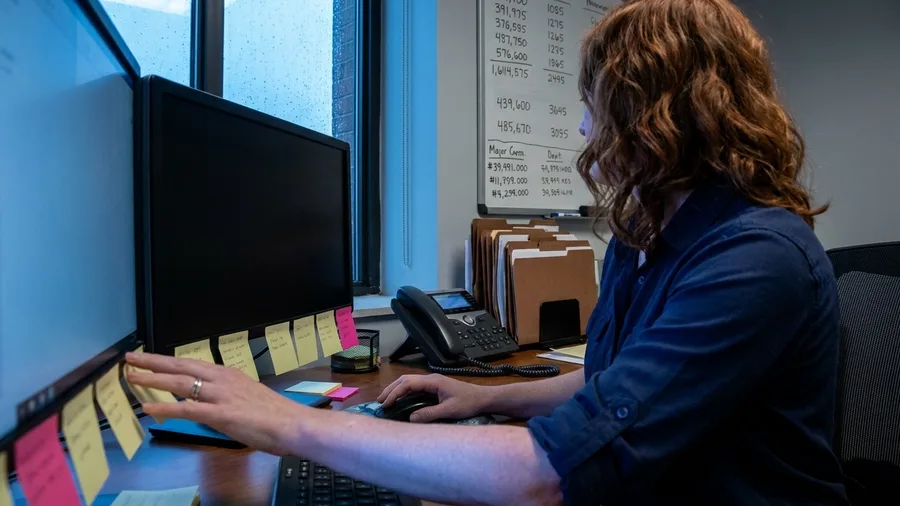
Ninety minutes is what it takes to build one load-inquiry workflow by hand for a 12-truck freight broker in Texas.
A carrier emails a rate request, the form catches it, and the broker's database gets the record without anyone retyping it.
That's the customer list, the one place every inquiry has to land.
The assistant writes the field map in 30 to 60 seconds, and 20 minutes of checking against the client's real form catches what it missed.
Make or Zapier runs the connection; ChatGPT or Claude drafts which field goes where and what happens on a bad entry. Check Make or Zapier's pricing page for task and run limits.
The hard part is the client's logins, inbox and customer database. A broken automation loses leads quietly, which is worse than no automation at all. Price a 30-day fix-it window into the fee so the first failure is your problem, not a refund.
The entry band is $400 to $1,500 for one workflow, never for "a system." The smallest paid first job is one live path from form to database. That single connection is the proof a broker needs before paying for a second.
💡 Tip: Do not promise to automate their whole sales process. Promise one path from form to record, and deliver it in a day.
Selling prompts vs installing outcomes
Selling prompt packs
- Buyer pays $19 once and disappears
- Thousands of identical PDFs compete on price
- No deadline, no urgency, no repeat work
- You compete with free YouTube tutorials
Installing an outcome
- Buyer has a broken workflow and a deadline
- You charge $400–$1,500 for one live path
- The 30-day fix window creates a second conversation
- Repeat work comes from the same client
2. Voice Notes Turned Into Field Inspection Reports
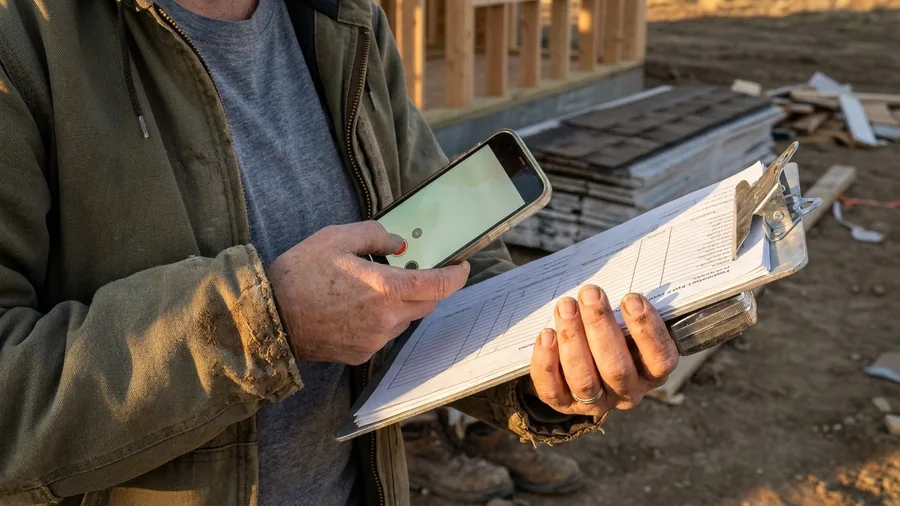
A 30-minute voice memo becomes a finished inspection report, in the contractor's own template, in about 12 minutes of your time. The recording is the messy input, the same as a web form, except this one arrives as speech from a job site.
The buyer is an inspector, contractor or adjuster who talks a whole job into a phone and has no time to type it.
Take on one contractor who already sends voice memos. Their own site template is the format you build against, and the work repeats every week.
Push the audio through AudioPen, which transcribes it with OpenAI's Whisper. A 30-minute recording becomes text in about 1 to 2 minutes.
Paste the transcript into ChatGPT or Claude with the contractor's template and it formats the report in 10 to 60 seconds. Typing the same job by hand takes about 45 minutes.
Prompt to copy
You are formatting a field inspection transcript into our company report. Paste the transcript: [TRANSCRIPT]. Use this section order from our template: [SECTIONS]. Keep our headings and dropdown wording common to industry. Flag every measurement and code reference with [VERIFY] so I check it against the photos. Leave out anything the transcript does not state. Do not guess a number.
That flag matters, because this report is a record someone may rely on later. Every measurement, code reference and photo caption gets checked against the site photos. That review takes 15 to 20 minutes, and the assistant's draft never goes out raw.
Charge per report or as a monthly batch, inside the $400 to $1,500 band. AudioPen sells annual and two-year plans only, so confirm its current cost on its own page first. The first paid job is one recording turned into the contractor's template.
| Service | Who buys it | By hand (minutes) | Assistant's own time | Review and edits (minutes) | First-project fee band |
|---|---|---|---|---|---|
| Intake workflow install | 12-truck freight broker | 90 | 30–60 seconds | 20 | $400–$1,500 |
| Voice notes to reports | Contractors, inspectors, adjusters | 45 | 1–2 min + 10–60 sec | 15–20 | $400–$1,500 |
| Listing optimization retainer | Amazon/Shopify sellers | 180 | 30–60 sec per listing | 15–20 | $400–$1,500 |
| Product photo studio | Etsy and Shopify sellers | 120 | 10–30 sec per image | 20 | $400–$1,500 |
| Pre-bill chart review setup | Small specialty clinic | 120 | 1–2 min per chart | 20–25 | $2,500–$6,000 |
| Claims denial recovery | 5-person dental office | 150 | 30–60 sec per letter | 20 | $2,500–$6,000 |
| Regulatory filing drafts | Compliance-heavy firms | 180 | 1–2 min read + several min research | 25 | $2,500–$6,000 |
| Audit workpaper prep | 3-person CPA firm | 120 | 1–2 min per file | 20 | $2,500–$6,000 |
| Offline document search install | Banks, clinics, defense suppliers | 960 (2 days) | Several min to ~30 min per run | 25 | $25,000–$60,000 |
3. Rewriting Seller Listings and the Hidden Search Words

Rewriting the same 20 listings by hand takes about three hours, and it never stays done. Titles, bullets and the back end have to be redone as rules shift.
That's the part of a listing a shopper never sees: the search words buried in the seller's settings, not the product page.
Sellers with 40 to 400 SKUs pay monthly for this, so it becomes a retainer rather than a one-off. ChatGPT or Claude rewrites each listing in 30 to 60 seconds.
Launch Fast is a tool sellers may already run for the data. The service is the human layer that checks its output.
Marketplace character limits and listing policies change, and a suppressed listing costs the client real sales. Confirm current limits on the marketplace's own seller pages, never from memory. Then 15 to 20 minutes per batch checking claims, units and wording.
The arithmetic: 20 listings at 30 to 60 seconds is 10 to 20 machine minutes, plus 15 to 20 checking, against three hours by hand. Month one is a paid audit of 10 listings; the retainer sits in the $400 to $1,500 band.
💡 Tip: Sell the first month as a paid audit of 10 listings. It is easier to say yes to than a retainer.
4. The Product Photo Studio for Small E-Commerce Sellers
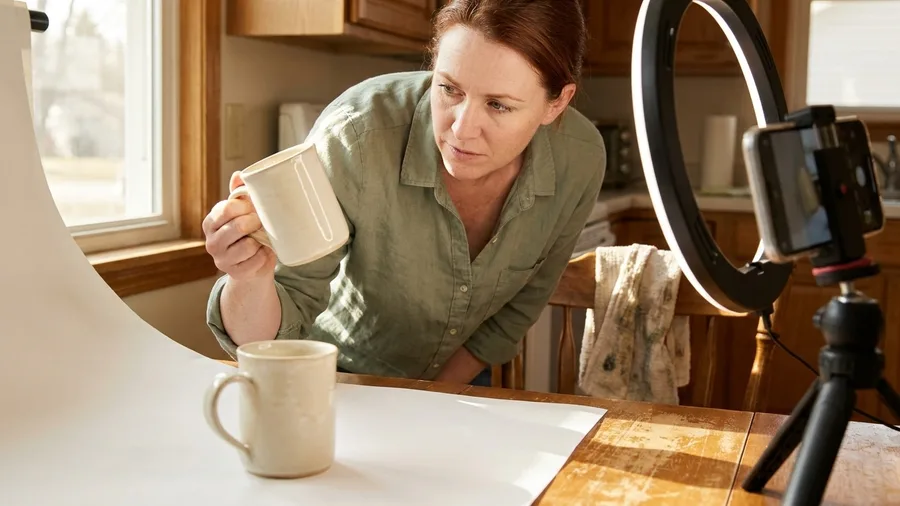
A cleaned, background-replaced photo set for an Etsy or Shopify seller is a paid job, not a prompt. A listing lives or dies on the image matching what ships, so a wrong label or color drives returns and platform complaints.
A set takes about 2 hours in a basic editor by hand.
Midjourney, DALL-E or Stable Diffusion cleans each of 10 shots in 10 to 30 seconds, then 20 minutes of checking edges, color and label text against the real item catches what the tool guessed.
Plans with high resolution and more generations cost more, so check the vendor's own pricing page.
Ledger line: 10 photos, $400 to $1,500 per set, sold to sellers who shoot on a kitchen table; the smallest paid first job is one set for one product line.
💡 Tip: Buy one of the seller's products yourself and photograph it on a clean background. That is your portfolio.
⚠️ COMMON MISTAKE
Do not paste patient records into a free chatbot
Patient records never go into a consumer chatbot on a free or personal plan. Work only inside tools the clinic's compliance officer approves, and send the reader to HIPAA and payer rules rather than quoting them from memory.
5. Pre-Bill Chart Review Setup for a Small Specialty Clinic
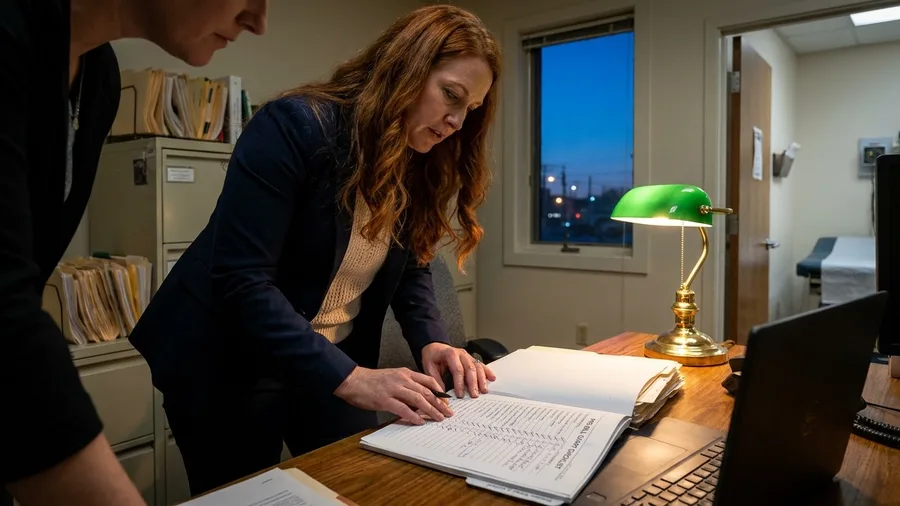
Patient records never go into a consumer chatbot on a free or personal plan. Inside a small specialty clinic the buyer is the practice manager and the gate is compliance.
Work only in a ChatGPT or Claude workspace the clinic's compliance officer approves, and let HIPAA and payer rules decide what is permitted.
The job is real: clinics lose money to documentation and coding gaps, and tuning a review pass before claims go out is setup work they pay an outside operator for.
Charta Health automates that review across payer and CPT codes. You sell setup and tuning for one specialty, not a platform.
On a 25-chart sample, a hand review runs nearly 2 hours. The assistant flags missing elements in 1 to 2 minutes per chart, then 20 to 25 minutes of clinician-side review happens before anything changes.
A two-week pilot brings $2,500 to $6,000, and the practice manager's sign-off is the deliverable.
When the money actually arrives
Timings assume one operator working part-time on sales while holding another job. Results vary by buyer access.
6. The Claims Denial Recovery Desk for Small Practices

They sit in a small dental practice's billing inbox – five staff, Ohio, a stack of denials and a payer deadline on the calendar. A reimbursement runner-up just denied, and the appeal window is counting down while nobody has time to open it.
Claims denial recovery had 4 projects in a scrape of 8,448 AI projects. That is the whole opening: practices with denials and no one to draft the appeals.
Use ChatGPT or Claude to draft each letter, 30 to 60 seconds apiece. By hand, 15 denials take about 2.5 hours; verifying dates, codes and the payer's stated reason takes another 20 minutes. The evidence requirement comes from each payer's own policy page.
The batch fee runs $2,500-$6,000. Price the first pass as a paid sample of 5 denials so the office can see the letters before committing.
Jargon you will hear from buyers
7. Regulatory Filing Drafts for Small Compliance-Heavy Firms

Prompt to copy
Draft a quarterly filing from these source documents [attachments] under the agency's current instructions. Include a figure-by-figure diff against last quarter's filing, with every changed number listed separately, and flag anything you could not find.
That prompt goes into ChatGPT or Claude with the prior filing attached. The rule-bound part stays with the client's signer, who checks every figure against the agency's published instructions. Never trust a rule quoted from memory.
A firm filing for 20-50 clients pays for the first draft. Regulatory filing automation drew 5 projects in the 8,448-project scrape. Three hours by hand becomes roughly 25 minutes of diffing.
📊 The audit workpaper first pass, step by step
Read the engagement scope
Confirm in writing which workpapers, which client, and which deadline the firm wants prepared.
Open the firm's template
Copy the template into your workspace. Every tie-out and tick mark stays in the firm's own format.
Run the read pass
Upload one PDF or spreadsheet at a time to ChatGPT or Claude. The assistant reads each in 1 to 2 minutes.
Extract and tie out
Check each total against the source document. Mark every number you cannot tie out as NEEDS CHECK.
Hand back for review
Deliver the populated template with 20 minutes of your own reconciliation. The firm's reviewer signs off.
8. Audit Workpaper Prep for Three-Person CPA Firms

If you never sign anything. A three-person CPA firm in Oregon has tie-outs, sample selection and checklists to populate before anyone reviews them. That first pass is the job.
Read: upload the PDFs and spreadsheets to ChatGPT or Claude. Each takes 1 to 2 minutes. Reconcile: match totals and tick marks to the firm's own template, about 20 minutes. Stop: anything past the engagement letter goes back to the firm's reviewer.
Professional standards and the firm's quality rules decide what can be delegated. Financial auditing had just 2 projects in the 8,448-project scrape. Blue J serves 2,800+ organizations, but only in tax research.
86% of roughly 46,000 US CPA firms have fewer than 10 employees. Two hours by hand becomes a 20-minute reconcile. Start with the firm's smallest client at $2,500-$6,000 per engagement.
9. The Offline Document Search Install for Air-Gapped Sites
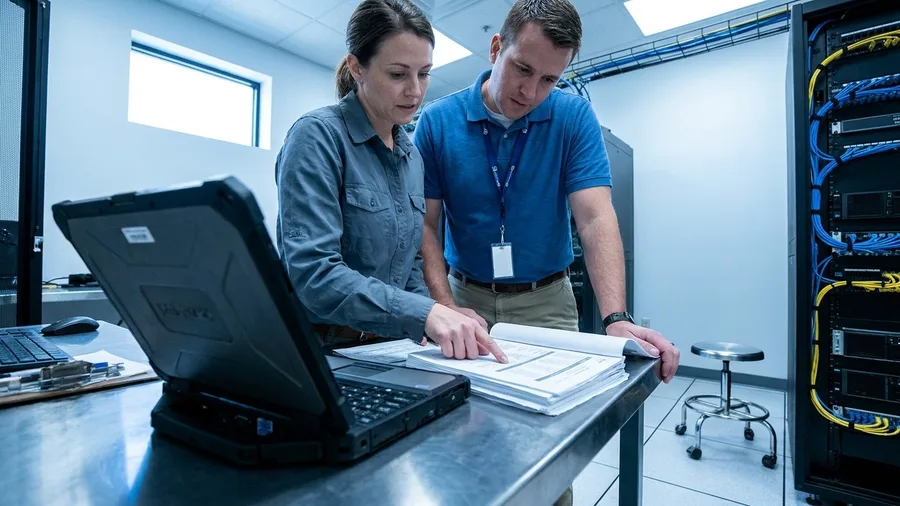
Prompt to copy
Answer only from these 20 documents. For each answer, cite the document name and page. If the answer is not in the documents, say so and stop.
That test runs on the site's own hardware, with no cloud API. Y Combinator lists four pieces: an offline model, deployment tooling, certifications reaching defense and financial levels, and dedicated hardware. A solo operator partners with an integrator rather than bidding alone.
Setup takes about 2 days by hand, and each run on local hardware takes several minutes to about 30. Testing against 20 known documents takes 25 minutes. The pilot band runs $25,000-$60,000 for one department, never a full rollout.
💡 PRO TIP
The 30-day fix window is the pitch
Include a 30-day fix-it window on every automation install. It removes the buyer's biggest fear — that the thing breaks on week two — and it gives you a legitimate reason to call them back.
Frequently Asked Questions
Do I need to know how to code to sell these services?
No. The tools — Make, Zapier, ChatGPT, Claude — are configured through menus and plain language. What matters is that you can read a business process and describe it clearly.
How much does it cost to get started?
Start on free tiers of one assistant and one automation tool. Upgrade only after a client signs. The paid plans for Make, Zapier, ChatGPT, Claude, Midjourney and AudioPen are priced on their own pages, and you should check those before quoting a client.
Which service has the least competition?
Claims denial recovery had 4 projects in a scrape of 8,448 AI projects. Financial auditing had 2. The infrastructure side — tool integration, runtimes, memory — had 150 or more projects each.
Is it safe to put client data into ChatGPT or Claude?
Not on a free or personal plan without the client's written approval. Chats on those plans may be used to improve the company's models. For clinical or financial data, use only the workspace the client's compliance team approves.
What is the smallest paid first job for each service?
It varies by service. For intake automation, one live form-to-CRM path. For denials, a 5-denial sample. For offline search, a two-week pilot with one department and 20 known documents. Every one of these is fixed-fee and fixed-scope.
The service you can sell this week
Pick the service where you can already get a meeting this month. Call or email that person and propose one paid pilot at the entry band or the compliance band, scoped to a single workflow, a single batch, or a single filing.
Here is the first three sentences of that email: "I noticed your team is still keying load inquiries into the CRM by hand. I can connect the form to your CRM and have a test inquiry flowing through in under a day. Would a fixed-fee pilot at $[amount] and a 30-day fix window be worth 20 minutes this week?"
Swap the bolded detail for the buyer you chose. One scope. One fee. One meeting.