

The most expensive part of AI is not the model. It is the fixing, rewriting and waiting that starts the moment the model is wrong in a way the reader did not catch.
Most teams watch the token line. Nobody watches the rework log. That gap is where the real bill accumulates, and it does not arrive with a dashboard.
This article separates the $67 billion headline from a company's own exposure, then gives the two controls that make the decision local.
By the end you will know where your money leaks, why better models do not close it, and what to audit on Monday.
The $67 billion is an estimate, not your invoice
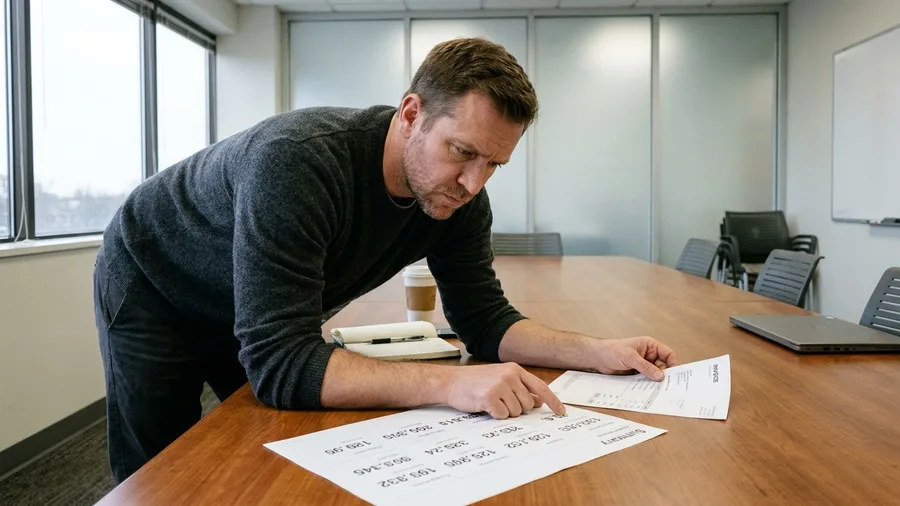
The figure is a global estimate, not a bill anyone can hand you. Forbes attributes about $67 billion in worldwide damage to AI errors.
A hallucination is the failure behind it: the tool states something false with total confidence, and nothing in the answer signals doubt.
When a chatbot invents a policy, a price or a source, that is a hallucination.
That number has no per-company share. No analyst or vendor can work out what portion belongs to your team, and quoting it as your exposure turns an attention figure into a budget line with nothing behind it.
The damage that does reach your books looks smaller and duller. Someone spends an afternoon redoing work the tool got wrong. A pull request sits in the queue waiting on a reviewer. A letter from a lawyer arrives over a citation nobody checked.
Keep the two sources apart. Forbes is where the global estimate comes from. Your fix log is where your own exposure comes from. Swap them and the budget case collapses.
Quick check: Ask whether the line is aggregate or yours. If it is aggregate, it belongs in the meeting, not the spreadsheet.
Token spend is the smallest line on the bill

Each unit of text an AI tool processes is counted as a token, a rough word fragment, and the tool bills you for every one it reads and writes. That charge is real and it is visible.
A survey of 2,444 companies by Entelligence AI found it is not the largest part of the cost. For every $1.00 spent on tokens, firms spent $0.44 repairing bugs, $0.27 rewriting AI-generated code and $0.11 waiting on review and merging.
That adds up to $0.82 on top of each dollar, and it scales quietly. A $100 token bill drags roughly $82 of extra work behind it.
A $10,000 month carries about $8,200, so the invoice you approve shows a fraction of the money that actually leaves.
This is why a cheaper model can cost more. If a lower token price comes with sloppier drafts, the fix and rewrite columns grow faster than the invoice shrinks. The discount gets paid back in salaries.
The test: Log one month of hours spent fixing, rewriting and waiting on review beside the token bill. Accept or reject the survey ratio on your own figures, not on the vendor slide.
| Cost line | Per $1.00 of token spend | What triggers it |
|---|---|---|
| Token spend | $1.00 | The AI call itself |
| Bug fixes | $0.44 | Wrong output that reached code or data |
| Rewriting AI-generated code | $0.27 | Output that ran but needed replacement |
| Review and merge delay | $0.11 | Waiting for a person to approve |
| Downstream total | $0.82 | Rework beyond the token invoice |
One bad answer averages $4.4 million in damage

The average is misleading because it is pulled upward by a small number of disasters. Forbes reports that a single AI error costs organizations $4.4 million on average.
It also reports that nearly half of organizations have already absorbed one. In the same reporting, only 9% of workers say they trust AI for complex, business-critical decisions.
Picture the distribution instead. Most wrong answers cost an hour: a corrected sentence, a rerun, a rewrite of a paragraph.
The huge average comes from the rare answer that escapes the chat and lands somewhere expensive, such as a legal filing, a shipped order or a number quoted to a customer.
Those few events are the ones that produce the seven-figure line, and they are also why the trust figure sits so low. People who have watched one reach the outside stop trusting the tool for anything that leaves the room.
Where to gate: Put review on anything that reaches a filing, a shipment or a customer. Drafting internal notes and rough summaries can run with a light read. One rule covers both, and it costs nothing to apply.
⚠️ COMMON MISTAKE
Do not quote the average as your risk
The $4.4 million average describes the rare failure, not a typical error. Use it to decide which workflows need a gate, not to budget for your team. Most AI mistakes still cost an hour.
The visible cost is four hours a week
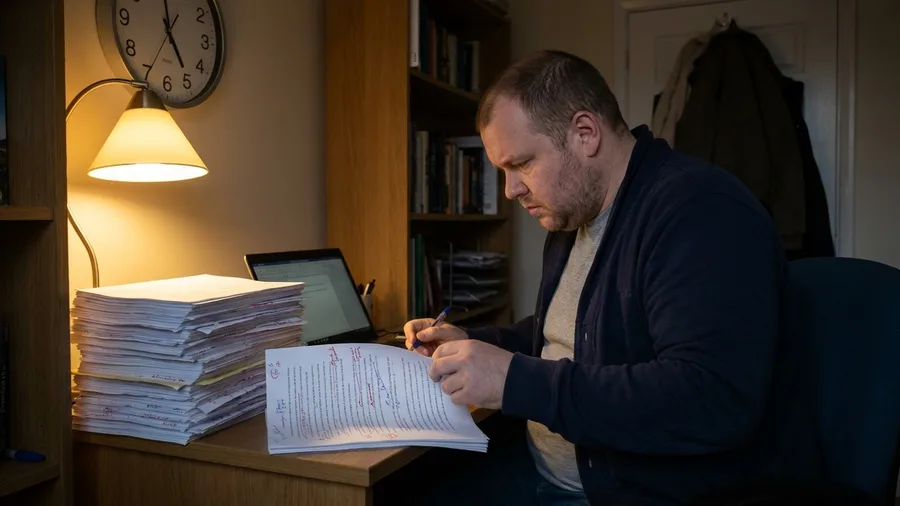
A rare bad answer lands in a filing once a season. The steady cost lands every week, and it is the hours your team already spends checking what the AI wrote.
Forbes puts that at more than four hours a week per employee, plus the equivalent of 51 workdays a year lost to technology friction, up 42% from 2025.
That time is salary. It comes out of the same payroll as billable work, but almost nobody puts it next to the AI invoice, so the invoice looks smaller than the cost it creates.
One floor of ten people checking for four hours each adds 40 hours a week to the real bill. At a loaded $45 an hour that is $1,800 a week, or about $7,800 a month. The model bill may be a fraction of that.
The hours are not waste when someone owns them. The failure is review that no one priced or assigned. Put those hours in the AI cost line and you can finally ask whether the output earns its fully loaded bill.
What a $1 token bill actually costs
Arithmetic from the survey ratio, not a forecast for your company.
The best model is wrong one answer in five

Review stays on the books because the models have a floor, not a downhill slope to zero. One benchmark put 6,000 factual questions, spread over 42 topics, to the leading systems. Even the best of them made something up 22 times in 100.
OpenAI's o3 did worse. Tested on PersonQA, it invented an answer 33% of the time. The company had claimed a ceiling under 5%. That is nearly seven times the promise, and it came from a top-tier product.
Rates under 5% do turn up, but only on narrow jobs where the model summarizes text you handed it. Ask it a factual question with no source attached and the rate climbs. Upgrades move the floor a little. They do not remove it.
What that means for a budget: price a model upgrade as a shorter review step. The reviewer still reads every customer-facing number. They just finish sooner.
The words in this crisis, decoded
Web search fixes the citation, not the claim

Web search cuts the errors that carry a link and barely touches the confident wrong sentence. On the HalluHard test, Claude-Opus-4.5 invented 60.0% of its answers with search off. With search on, that fell to 30.2%. Better, still one wrong answer in three.
Split the errors and the pattern shows. With search running, wrong citations dropped from 38.6% to 7.0%. Wrong content fell only from 83.9% to 29.5%. The tool cleaned up the footnotes and left the claims alone.
Search does not even level the field between products. GPT-5.2-thinking, search on, still sat at 38.2%. A clickable link can be opened and checked in seconds. A fluent wrong sentence reads exactly like a right one.
So search buys verifiability, not accuracy. It hands your reviewer a link to click, which shortens the check on anything cited. The uncited claim still needs a person who knows the subject.
What web search actually changes
Fixed by search
- Wrong citations fall 38.6% to 7.0%
- A cited line is checked in seconds
- Re-checks catch 80-97% of repeat bad refs
Still broken
- Wrong content falls only to 29.5%
- An openable link can back a false claim
- Best model still wrong on 22% of 6,000 questions
A wrong reference survives into every later turn

A wrong reference caught by turn ten has already ridden along in every answer since turn one. The HalluHard benchmark found 3 to 20% of incorrect references from the first exchange reappear in later turns of the same chat.
The mechanism is buildup, not repetition for its own sake. Each answer rests on the one before it, so a made-up case or link gets picked up and restated with more confidence each time. By turn ten it reads like settled background.
The fix is cheap at the start. Check the citations in the first reply, before you ask a follow-up that builds on them. If one is wrong, open a fresh chat and paste the corrected source in at the top.
Two minutes at turn one replaces a full audit at turn ten, when the bad reference has spread through a dozen answers. That is the moment verifiability in the first reply actually pays you back: catch it before it is reused.
Code and court filings are where it costs money

Your exposed money sits in two places: the line of code that pulls in a package, and the sentence that goes into a court filing. Both turn a chat answer into an artifact with your name on it, and both fail at a measurable rate.
A scan of 199,840 Python and JavaScript generations found invented package names in 3.6 to 5.0% of package mentions.
That is 2.2 to 3.4% of generations, meaning a working week of AI-assisted code carries a handful of installs that point at nothing.
Research cited by FDM Group puts hallucination on 75% of legal court queries.
The receipts are real filings with real penalties. A California judge fined a lawyer $999.99 after seven fake citations appeared in State Farm filings. Mata v.
Avianca drew $5,000, Whiting v. City of Athens drew $15,000 per attorney plus opposing fees, and several lawyers have paid above $10,000.
Where to gate: the install command and the sign-off before filing. A wrong name caught in chat costs a minute. The same name caught after install or after submission costs you a broken build or a sanction.
🧭 Where a hallucination becomes an expense
The AI answers
It writes a confident sentence, citation or package name.
You click or install
The wrong answer leaves the chat as a real artifact.
Rework starts
Fix, rewrite and review time begins to accumulate.
The tail hits
The rare error reaches a customer, a filing or production.
The bill appears
Legal, engineering and review costs land on separate lines.
Review is the bottleneck, so staff it like one

A named person with the right to reject work is what stops a bad answer reaching a customer, not a faster model.
Your draft appears in 10 to 60 seconds; a summary of a long PDF takes one to two minutes, and agent modes run from several minutes to half an hour.
Checking it takes as long as checking always did.
So the queue builds at the desk of whoever reads the output last. Give each output type one owner: code, contracts, customer-facing copy. That person decides whether it ships, and that decision is final.
The catch is that this authority is invisible on the org chart until you price it.
The reviewer's hours come out of the four-plus hours a week each employee already spends checking AI output.
Book those hours against the workflow, so review shows up as a line rather than spare capacity nobody counted.
One accountable reviewer per output type catches more than a model upgrade or a new tool. It also tells you which workflow earns its keep and which one keeps sending work back.
Four kinds of data never go into a chatbot

A named reviewer stops a bad answer on its way out. Some inputs must never enter the tool at all. Passwords stay out.
So do client files, medical records and financial records. Four data kinds, and any one pasted into a chat window can leave the building for good.
That window sits on a free or personal plan for most teams. On those plans, chats may be used to train the company's models unless someone turns that off in settings. Check the switch itself. Do not trust a marketing page that says privacy first.
Uploaded files follow their own rules, and those rules shift between plans and between months.
Before a spreadsheet or a contract goes in, open the product's settings and privacy pages and read what that tier does with an upload.
Five minutes there beats a guess. Always.
A single page catches almost all of it. List the four data kinds at the top, then add the settings step: confirm the training switch is off before the first paste of the week.
Hang that page where the chat window gets opened, and nobody slows down.
💡 PRO TIP
The switch you check once per account
Open the assistant's settings, find the control that lets your chats train the company's models, and turn it off on every account your team uses. Do it during onboarding, not after the first incident.
Audit one workflow's rework before you scale

With the data gate shut and a reviewer named, the remaining question is scale, and one workflow's ledger answers it.
Pick the workflow where a wrong answer reaches a customer, a filing or production code. Not the safest one, not the busiest one. The exposed one.
Log four numbers for a calendar month on a single spreadsheet row: tokens spent, hours fixing bad output, hours rewriting it, hours waiting on review.
The token figure comes off the invoice. The three hour figures come off your own calendar, entered the same week they happen.
Then divide. Add the three hour costs at loaded rates, and compare the total against the token spend.
Put it beside the Entelligence AI survey figure of $0.82 per $1.00 across 2,444 companies. Close means the workflow is typical.
Far above means the fix, rewrite and review hours are eating the savings.
The ratio is the decision. Below your threshold, expand the workflow. Above it, gate it harder or drop it. Quick check: one month of that ledger is a stronger budget case than the $67 billion headline.
Three mistakes that keep the bill invisible
Frequently Asked Questions
Is the $67 billion hallucination figure something I should budget against?
No. It is a global estimate of aggregate cost, not a per-company number. Use it to know the problem is real and priced, then measure your own workflow's rework ratio before you put a number in a budget.
Will a better model or web search make review unnecessary?
No. The best-performing model still hallucinated 22% of the time on the AA-Omniscience benchmark. Web search cut citation errors sharply but left content errors at 29.5% for one model, and another model still sat at 38.2% with search on.
How long does AI actually take compared to a person?
A 700-word page from a chat assistant takes about 10 to 60 seconds. A long PDF or transcript summary takes one to two minutes. Deep-research and agent modes take several minutes up to about half an hour. Your review and edits are the slow part.
What data should never go into a chatbot?
Passwords, client files, and medical or financial records. On free and personal plans, chats may train the company's models unless you turn that off in settings. Check the settings and privacy pages for each tool your team uses.
How do I know whether my AI workflow is costing more than it saves?
Log four numbers for a month on one workflow: tokens spent, hours fixing, hours rewriting, hours waiting on review. Compare the result to the survey ratio of $0.82 of rework per $1.00 of tokens. If yours is higher, gate it harder.
Do I need to code to run this audit?
No. The audit is a spreadsheet with four columns and a monthly total. What it needs is one person with the authority to send work back, and enough time to fill in the hours honestly.
The one workflow you put a reviewer on this week
Choose the one workflow where a wrong answer reaches a customer, a filing or production code. Put a named reviewer on it with the standing right to reject. Log a month of token spend against fix, rewrite and review hours.
Let that ratio, not the $67 billion headline, decide where AI expands and where it stays fenced.
If your work is drafting low-stakes copy behind a light read, you can relax. Code, legal filings and customer-facing numbers must gate hardest.