

Loading a trailer by hand runs about 90 minutes of steady work for a three-person crew. Dexterity's dual-armed Mech does the same dock job in roughly 50 minutes, review included, and that gap is the whole story in one shift.
That machine went live at FedEx's Hagerstown, Maryland hub on July 30, 2026. Amazon's Proteus already carries totes in 25 US fulfillment centers. The robots are not coming; they are on the clock.
What they take is narrow. Carrying, heavy lifting and trailer unloading go first. Picking a mixed shelf, judging a damaged box and handling something unfamiliar still need a person.
Ten robots have paid work now. The question for anyone in a warehouse is not whether a machine can do your task. It is whether the machine plus a supervisor costs less than you do.
By the end you can sort your own tasks into transport and judgment, and test any robot claim by its published deployment count and cost per hour, not its video.
What the robot does vs. what stays human
Robot handles
- Walking a tote 12 minutes across a warehouse
- Lifting a 50-pound parcel into a cart
- Unloading boxes from a trailer onto a conveyor
- Driving a sidewalk route in a dense neighborhood
Person still handles
- Deciding which item goes where
- Picking a specific product from a mixed bin
- Handling a damaged or irregular package
- Talking to a customer or a patient
On the warehouse floor
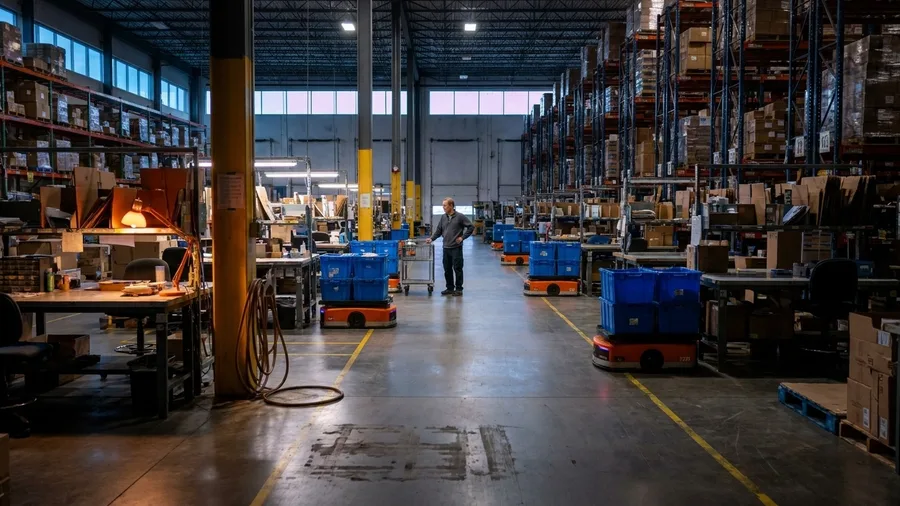
Warehouses are where the scoreboard is easiest to read, because the deployment counts are public and the cost math has already cleared. The robots here move things: totes, packages, carts.
The pattern to watch is which task gets automated first. It is almost never the deciding work. It is the walking, the lifting and the pushing that surrounds it.
1. Proteus already hauls totes in 25 US warehouses
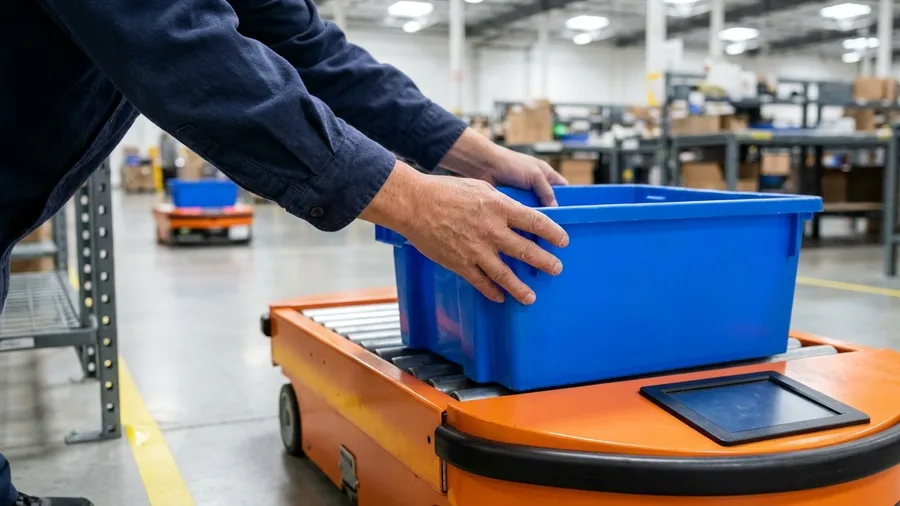
Proteus is Amazon's low, driverless carrier that slides under a stack of totes or a shelf and moves it across the floor. It works in 25 US fulfillment centers as of November 2026, so this is a running fleet, not a pilot.
Where it runs: the next version takes plain-language commands from workers. A person says where the load goes instead of writing a route in code. Europe is planned for the first half of 2027.
What to check: look at the floor between stations. The work it takes is the walk a person used to do behind a loaded cart for a whole shift, and the deciding work at each stop stays with the people there.
That order is the exposure test. Transport work is covered where the cost math has cleared, and pickup out of a bin is not. At 25 sites the arithmetic is published in the site count itself.
💡 Tip: Watch the trolley and cart work in any facility before the deciding work. That is where the cost math clears first.
Three reading errors on any robot story
2. Cardinal lifts 50-pound parcels into outbound carts
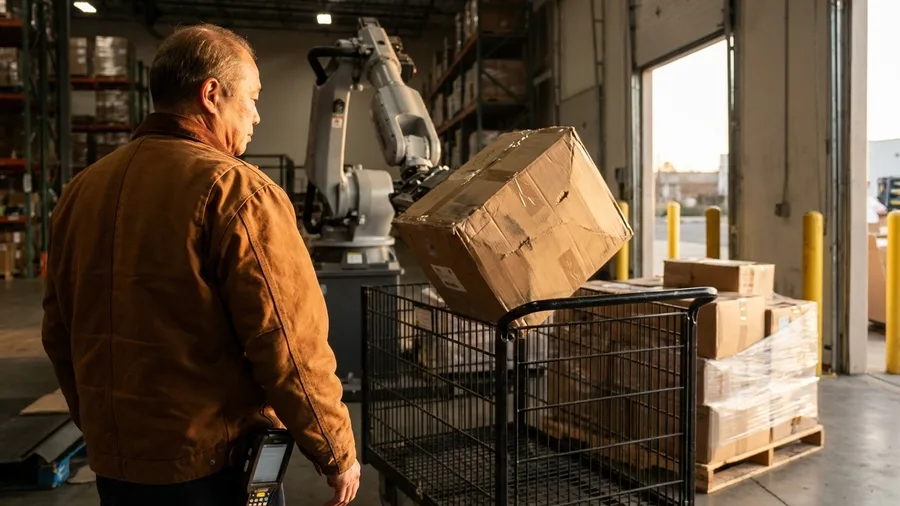
At about 50 pounds, yes. Cardinal is a robotic arm that picks up packages that size and loads them into outbound carts, in the same flow where people lift all shift.
Before: a worker bends, lifts, and stacks hundreds of parcels a shift. After: the arm does the lift and the person handles exceptions. Amazon plans to more than double its fleet of robotic arms in 2026, after more than 1 million robots network-wide since 2012.
The saving is thin. Packaging work is about 97 percent technically replaceable, but a robot runs roughly $45,400 a year against a US median salary of about $49,000. That narrow margin is why the heaviest, most repetitive lift goes first.
3. Vulcan is the first Amazon robot with touch
Prompt to copy
You are comparing warehouse robots on one task: picking mixed items from a cluttered shelf. For each robot below, list what its end effector senses, whether it uses vision only or vision plus force feedback, and whether the vendor publishes deployed unit counts. If a count is missing, write 'not published.' Keep it to one line per robot. Robots: [paste the list].
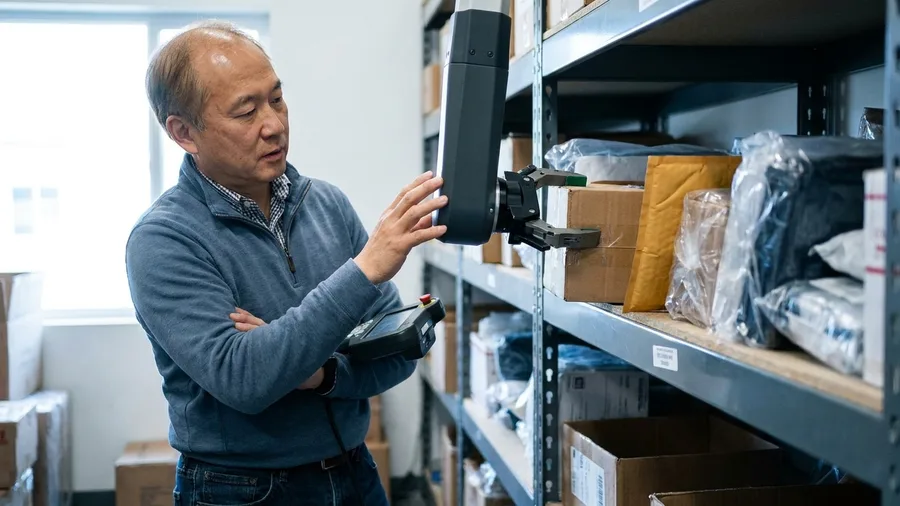
Vulcan is Amazon's first robot with a sense of touch. Vision tells it where an item sits; force feedback tells it how hard it is gripping, so it can work a tight bay instead of a neat, repeatable bin.
Touch was the blocker. Without it, an arm either crushes the product or drops it, which is why earlier machines stayed in orderly bins. Cluttered shelves hold most retail labor, so this is the gate that matters.
Quick check: Amazon has published no unit counts or rollout list for Vulcan, so it is a capability milestone, not a fleet you can count.
Until the doors and dollars per hour appear, treat what an arm can do and what it is cheaper to do as two separate questions.
| Robot | Who deploys it | The job it does | Scale today | What a person still does |
|---|---|---|---|---|
| Proteus | Amazon | Transports totes and shelving between stations | 25 US fulfillment centers | Picks items out of bins, handles exceptions |
| Cardinal | Amazon | Lifts packages up to 50 pounds into outbound carts | Fleet of robotic arms more than doubling in 2026 | Inspects damaged parcels, decides routing |
| Vulcan | Amazon | Feels grip in tight inventory bays | No published unit count | Handles fragile or irregular items |
| Mech | FedEx (Dexterity) | Loads and unloads trailers | Hagerstown, Maryland hub, announced July 2026 | Drives, secures loads, clears the last boxes |
| Stretch | DHL (Boston Dynamics) | Unloads boxes from trailers onto conveyors | More than 1,000 additional units ordered | Handles pallets and irregular freight |
| Digit | GXO Logistics (Agility Robotics) | Moves totes in a commercial operation | More than 100,000 totes over a year | Supervises, resets, handles mistakes |
| Carter | Robust AI | Assists a worker with a force-sensitive handlebar | Pilot deployments in warehouses and factories | Steers and decides the next task |
| Serve | Serve Robotics | Delivers restaurant orders on sidewalks | More than 2,000 robots, 4,000+ restaurants | Prepares food, handles building access |
| Coco | Coco Robotics | Delivers Little Caesars orders by sidewalk robot | More than 500,000 deliveries | Cooks, packages, handles refunds |
| Moxi 2.0 | Diligent Robotics | Fetches and carries supplies in hospitals | 25+ US hospitals, up to 18 hours a day | Clinical care and patient conversation |
Docks, trailers and factory floors
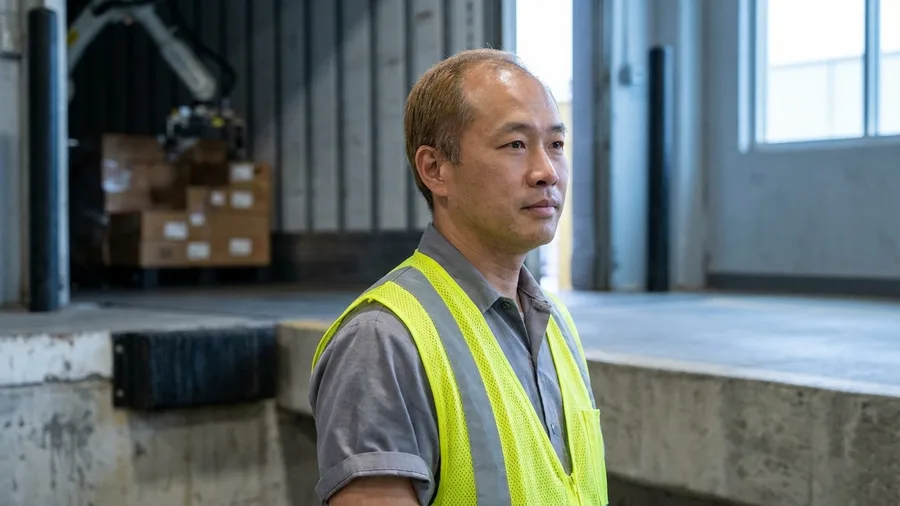
Dock work is the brutal end of logistics: hot trailers, heavy boxes, high turnover. That combination is why it automated early, and why the deployment plans here are counted in doors and hubs rather than pilot sites.
Two robots dominate this stretch: one that loads the trailer and one that unloads it.
4. Dexterity's Mech loads FedEx trailers in Maryland
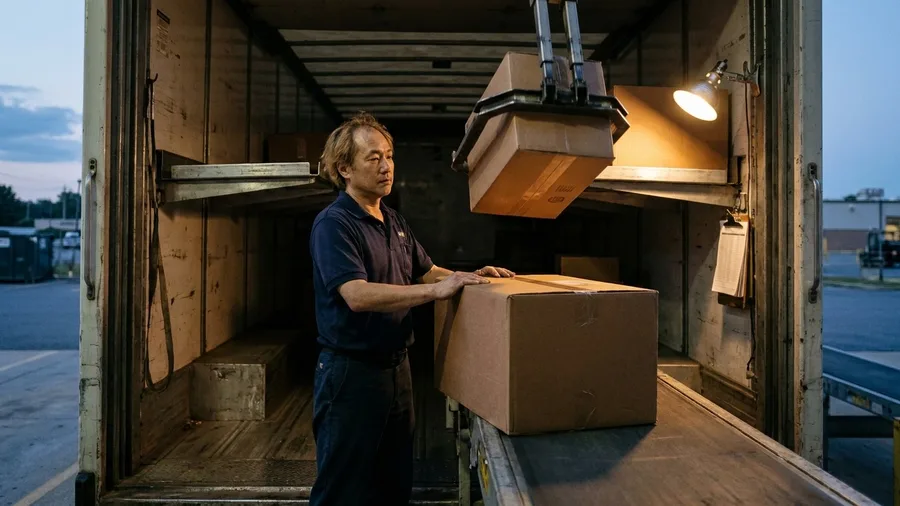
Trailer loading is the worst job on the dock: boxes come off a belt in a hot steel box for a full shift.
On July 30, 2026, FedEx put Dexterity's dual-armed Mech into its Hagerstown, Maryland hub to do it. Two arms load trailers, standing where the lift-and-turn work happens.
The plan is the number that matters. FedEx aims for automated trailer loading and unloading at thousands of dock doors across more than 20 US hubs over the next few years. That is a network target, not one pilot site with a camera crew.
By hand, a loader moves hundreds of parcels in a trailer over hours, feeling the heat and the bend every time.
Mech works a steady pace without a lunch break, and a person watching the line stays close. The check is the door count, not the arm speed on video.
Side by side: one loader, one trailer, by hand, all shift, against Mech loading across a FedEx hub door network. The thousand-door plan, not every door, is where the dock math actually clears.
💡 Tip: Dock work is where employers already struggle to fill jobs, which is why it automated before picking did.
5. Boston Dynamics' Stretch heads to 1,000 more DHL docks
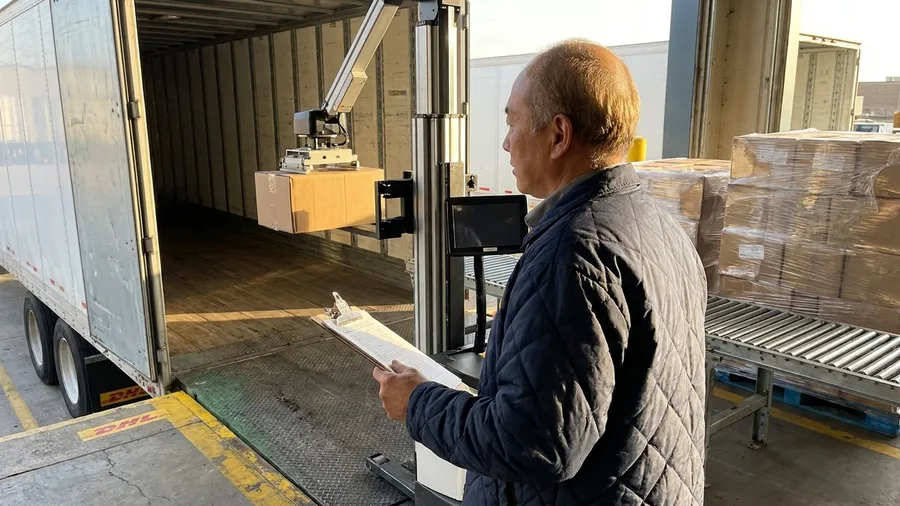
A four-figure order is the clearest sign a trailer robot has stopped being a test and started being stock.
DHL is adding more than 1,000 Boston Dynamics Stretch units to its docks, one of the largest single robot buys in logistics.
FedEx's Mech plan spreads across 20-plus hubs; this is one customer buying in bulk.
Stretch is a tall arm on a movable base. It reaches into a trailer, grips a box and sets it on a conveyor belt, one after another, for hours.
That is the end-of-line job where the last boxes sit deepest and backs give out first, and it is the job this machine is bought to take.
The check comes before the order, not after. Walk your dock and count the loads: sealed cartons lift cleanly, but pallets, bags, drums and freight that shifted in transit do not.
Those still need hands, plus someone to sweep the trailer floor when the boxes run out.
A buyer buying over a thousand units has already run that check against real trailers at real wages.
A video proves an arm can lift one perfect box; an order of that size says the cost per box beat the person doing it.
That is how to read the next robot announcement: look for the volume.
The box-only limit is also the boundary. A person still sorts the awkward freight and finishes the clean-out, so the job shrinks rather than vanishes.
Stretch takes the steady carton stream and leaves the irregular loads, which is why back injuries fall first and headcount second.
💡 Tip: Watch the order size in the next robot announcement, not the video. A thousand units is a budget line, not a demo.
6. Digit has moved 100,000 totes at GXO
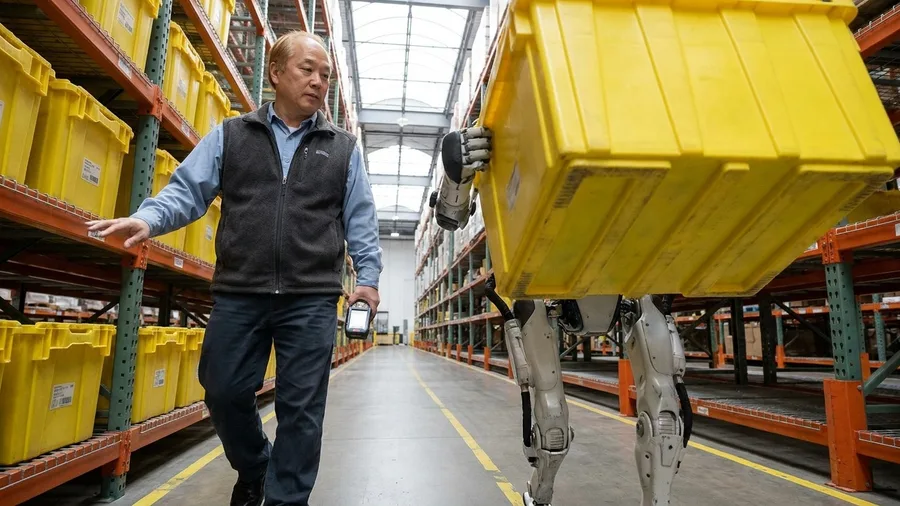
One has now done a version of that.
Agility Robotics' Digit has shifted more than 100,000 totes inside a working GXO Logistics site, with the contract running past the twelve-month mark.
The reason a human-shaped machine gets hired is fit, not looks. Digit walks the same aisles, grabs the same totes and works the same stations built for people, so the site needs no rebuild.
That saving is the business case, and it is why the humanoid form gets tried at all.
Now the catch. Spread over a year, 100,000 totes is a modest load for one machine, well under what a person manages across full shifts.
It is a real first, and proof the machine holds up in a live warehouse. It is not yet a shift-for-shift replacement.
So the question shifts from whether a humanoid can work to how many hours a day it runs and how often it stops.
Ask for uptime and totes per hour before you believe a humanoid has arrived. Until those numbers land, 100,000 totes is a count, not a cost case.
⚠️ COMMON MISTAKE
Don't confuse capability with deployment
A robot that can do a task is not a robot that is doing it for pay. The gap between the two is cost per hour, and it is where most announcements quietly stop.
7. Carter is the robot that still needs a human
Roughly $45,400 a year buys the machine, and about $49,000 a year buys the person. That few-thousand-dollar margin is why most robot jobs are still staffed, and why the ones that move are so narrow.
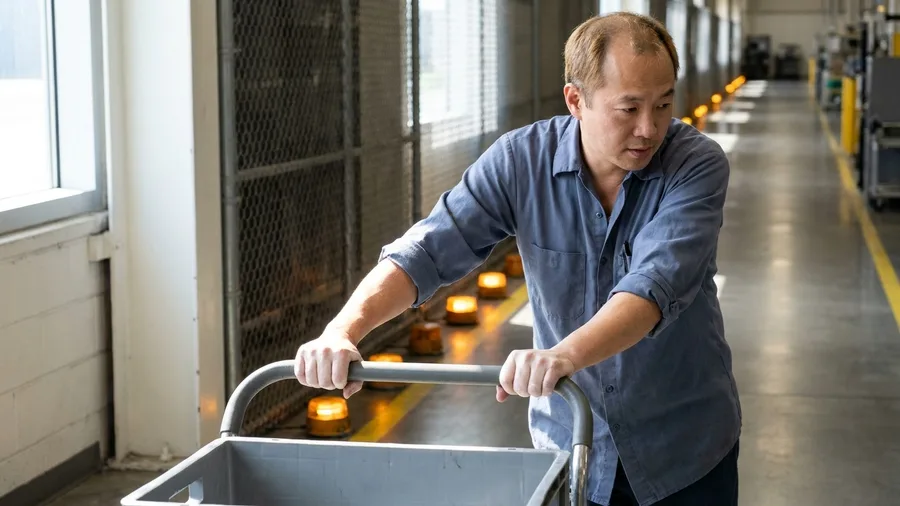
Now look at the other design. A wheeled cart called Carter, built by Robust AI, has a handlebar that senses how hard a worker pushes.
The worker steers it by hand or by gesture, through warehouse aisles and factory floors, and the cart does the carrying while the person keeps the deciding.
Then the two numbers worth carrying in your head. An Anthropic analysis found machines could technically handle about 74 percent of manual labor tasks. The same analysis found only 0.3 percent of all work is cheaper done by a robot than by a person.
The distance between 74 and 0.3 is money, not ability. One worker guiding two or three carts is often the only arrangement that covers its own cost today, because the wage stays on the books while the machine adds hours of hauling.
The test: not can a robot do this task, but is the robot plus the person who watches it cheaper than the person alone. Run that sum on your own job before you read another demo.
💡 Tip: Ask whether the robot replaces the worker or just the walking. Assistant robots are the ones shipping now.
The robot vocabulary, decoded
Sidewalks and hospital corridors
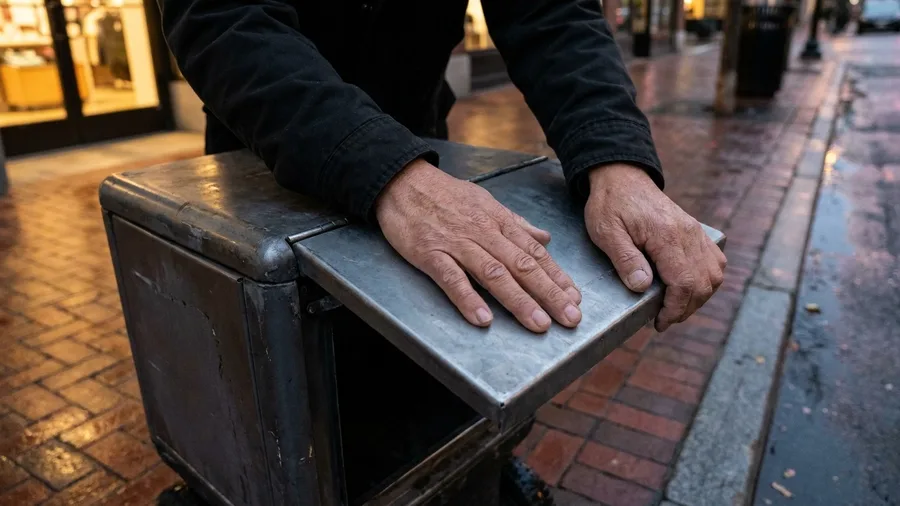
The last stretch leaves the warehouse entirely. These robots work in public space and in hospitals, where the cost math depends on density and on which minutes you are trying to save.
The pattern holds. The robot takes the fetch, and the person keeps the judgment.
8. Serve's sidewalk robots are already 2,000 strong
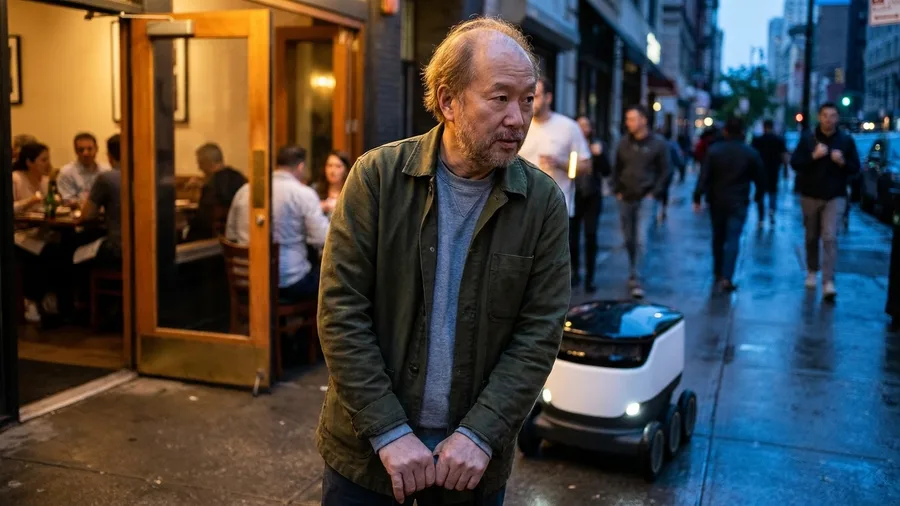
In a dense downtown, yes, and you will likely step around one this year. Outside that density, the last-half-mile cost case never arrives, so the answer changes with your zip code.
Serve runs a fleet of more than 2,000 sidewalk robots in the US. They reach roughly 3 million people and take orders from more than 4,000 restaurants, for Uber Eats, DoorDash and Grubhub. Grubhub came first, in Chicago, Los Angeles and Alexandria, Virginia.
short hops in packed neighborhoods, not a full driver route. The robot replaces the final half mile of a trip. Wherever a stop is not minutes from the next, a person has to recover it, and that supervision eats the saving.
What held indoors holds outside too. Automate the moving, keep the judgment with a person, and check the drop-off density before believing any map that promises your street.
9. Coco delivers Little Caesars by robot in three cities
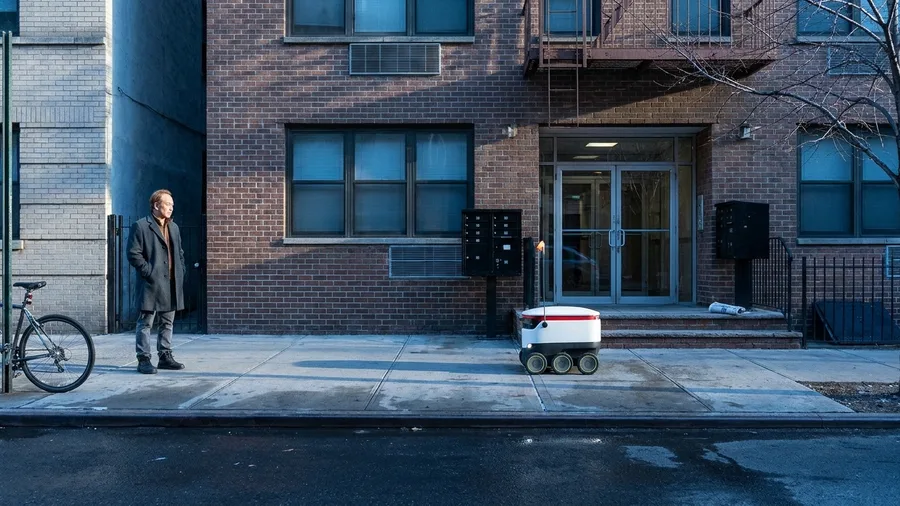
Half a million customers have already opened a door to one. Coco Robotics reports more than 500,000 zero-emission deliveries across the US and Europe, and Little Caesars orders now arrive by sidewalk robot in Los Angeles, Chicago and Miami.
Before you write off the suburbs, price the route yourself. Use a chat assistant for the arithmetic: paste in your stop count, the average distance between them, and the driver's hourly pay. Ask what each stop costs when supervision and recovery time are included.
Prompt to copy
You are costing out a sidewalk delivery robot for one neighborhood. Here are my numbers: [number of stops per shift], [average minutes between stops], [driver hourly pay], [hours a robot and its remote supervisor are on duty]. Calculate the cost per delivery for a human driver and for the robot with one supervisor watching several robots. Show each step of the arithmetic, state every assumption, and flag any number I left out. Keep it under 250 words.
The reply lands in seconds, and it is the density question in dollars. Check the assumptions first, because a wrong minutes-between-stops figure flips the verdict. Where stops sit minutes apart the robot wins, and customers at the door have already said yes.
Coco Robotics at a glance
🤖 Fleet and reach
More than 2,000 robots; about 3 million people reached
🍽️ Restaurants served
More than 4,000
🔌 Emissions
Zero at the tailpipe; charging power still counts
🚪 Doorstep handoff
Customer lifts the lid; no tip line, no driver to meet
🖥️ Supervision math
One remote operator watches several robots, not one
The limit
The robot wins only where stops sit minutes apart; spread them out and the driver's hourly pay covers more doors.
10. Moxi 2.0 runs 18-hour shifts in US hospitals
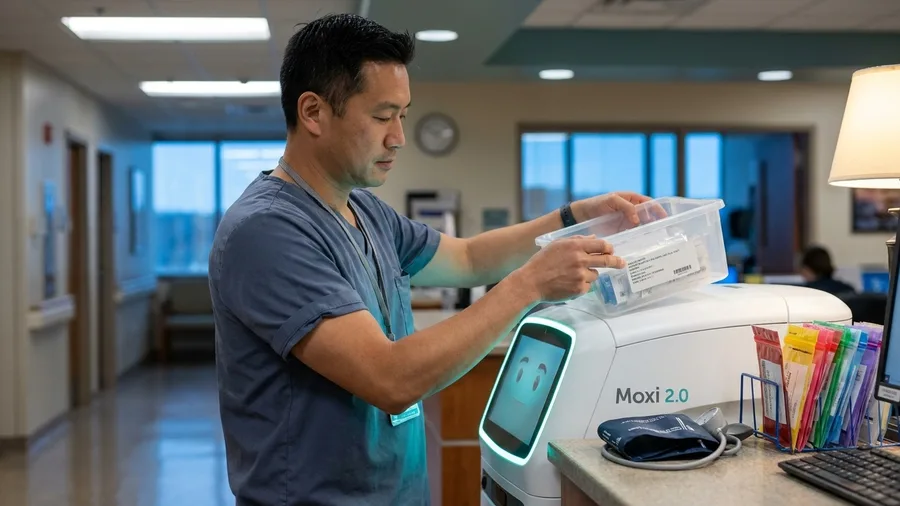
On a hospital floor, the tedious part is the errand: a nurse walks a specimen to the lab, waits for a clean cart, then walks back. Diligent Robotics' Moxi 2.0 does that run instead, up to 18 hours a day.
It senses its surroundings up to 15 times faster than the earlier version, and it is built on deliveries already completed across more than 25 US hospitals. What comes back is a fetched item at the right station.
The catch: Moxi cannot take a blood pressure or judge a patient, so the arithmetic is nurse minutes saved on errands, not a nurse replaced. The first hospital robot job is logistics, not care.
The deployment scorecard
Frequently Asked Questions
Do I need to code to work with these robots?
No. The newer Amazon Proteus takes plain-language commands from warehouse workers instead of programming. The jobs around these machines are mostly supervision, resets and exception handling, which are taught on site.
What does a robot cost compared with a worker?
For packaging work, a robot runs about $45,400 a year against a US median salary of about $49,000. That is a narrow margin, which is why robots appear where the lift is the whole job rather than everywhere.
Why is only 0.3 percent of work cheaper with robots?
Because a robot needs supervision, maintenance and a controlled space. Anthropic's analysis put technical capability at about 74 percent of manual labor tasks, but the cost case only clears in a narrow set of jobs.
Are humanoid robots actually working anywhere?
Yes, in one commercial case. Agility Robotics' Digit has moved more than 100,000 totes in a GXO Logistics operation running for over a year. That is a real job, but not yet a full-shift replacement.
Will delivery robots come to my town?
Only if you live in a dense neighborhood. Serve and Coco operate in cities like Chicago, Los Angeles, Miami and Alexandria, Virginia, where stops are minutes apart. Suburban routes do not yet make the cost work.
What should I check in the next robot announcement?
Two numbers: the deployment count and the cost per hour. If a company shows only a video, it has shown capability, not a job. The 74-percent-capable versus 0.3-percent-cheaper gap explains why.
The deployment count is the only number that matters
Across all ten, the pattern is consistent. Moving and lifting went first. Judgment, touch and conversation are last, and they are last because of cost, not capability.
The 74-percent-capable versus 0.3-percent-cheaper gap is why the takeover keeps arriving later than the demo. When the next robot announcement lands, check the deployment count and the cost per hour. If only the video is published, the math has not arrived yet.